

Premium Business subscribers can now promote posts mentioning their brands and add conversion links on X. Before brands turn customer praise into advertising, they need to check permission, claims, and compliance.
News Summary:
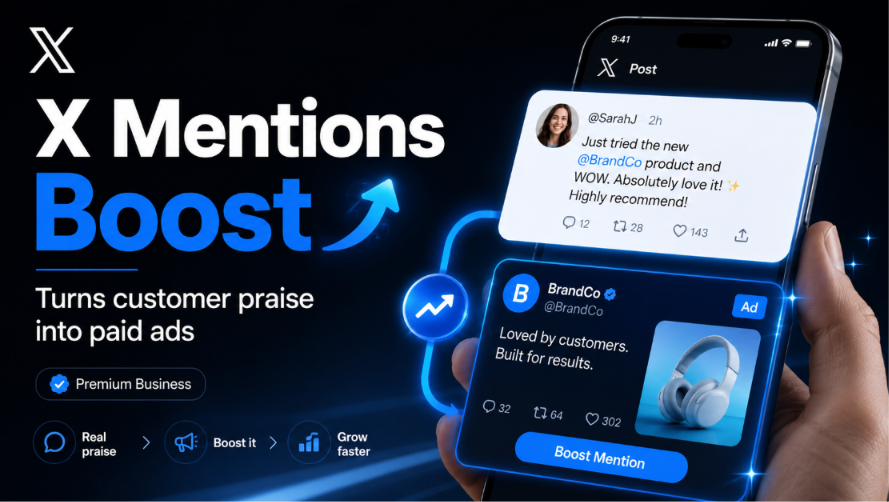
Brands can boost an X post that mentions them.
Advertisers can add a call-to-action button and destination link.
Each boost can have its own budget and campaign duration.
Access requires an X Premium Business subscription.
X is turning organic praise into advertising inventory.
The platform’s new Mentions Boost feature lets a company pay to expand the reach of a post written by another X user when that post mentions the brand. X says marketers can add a custom call-to-action button and link, turning a customer comment into a performance campaign without producing separate creative.
How Does X Mentions Boost Work?
When an eligible brand finds a post mentioning it, the company can choose the boost option, set a budget, and decide how long the promotion should run.
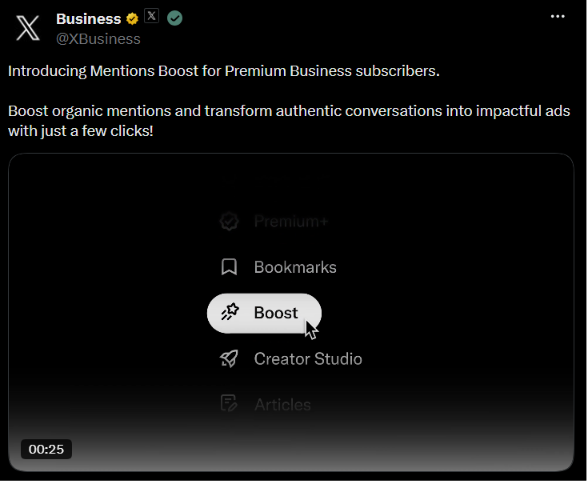
Mentions Boost expands X’s existing Boost product, which was designed to promote an account’s own posts. Social Media Today reports that access requires Premium Business, whose basic plan costs $200 per month before campaign spending.
Why Would Brands Promote Customer Posts?
A genuine customer post may feel more credible than polished advertising copy. It can also reduce the time needed to brief a designer and produce creative and secure internal approval.
But authenticity can weaken once the post becomes paid media.
A positive comment is not automatically an effective advertisement. The campaign still needs suitable targeting, a relevant landing page, and an offer that gives people a reason to act.
The Main Risk Isn’t Creative—It’s Control
X says advertisers are responsible for promoted content and must follow applicable laws, platform rules, and advertising standards. Promoted material is also subject to X’s ad-review process.
The US Federal Trade Commission says endorsements used in advertising must be truthful and not misleading. Its guidance also indicates that highlighting an unsolicited customer review in marketing can turn that review into an endorsement.
Expert flag: The public materials reviewed don’t clearly explain whether the original author must approve the promotion, receive a notification, block it, or what happens when the post is edited or deleted.
Brands shouldn’t treat a visible boost button as permission.
Before promoting a post, please obtain written approval from its author, save the complete original context, verify any product claims, and ensure the destination page matches what the customer actually said.
Is Mentions Boost Worth the Cost?
The feature may suit brands that already receive frequent positive mentions and actively advertise on X.
It’s harder to justify for smaller businesses that must first pay for premium services and then fund the campaign. A company with only a few usable customer posts may get better value from standard ads or creator partnerships.
Run a controlled test. Compare one mention of a Boost campaign with a normal promoted brand post using similar audiences, budgets, and conversion goals.
Measure qualified visits, leads, and sales, not impressions alone.
What Marketers Should Watch Next
The biggest unanswered questions concern author permission, post changes, campaign reporting, and the treatment of negative replies beneath promoted customer posts.
Until X publishes fuller documentation, marketers should treat Mentions Boost as an experimental advertising format not a risk-free shortcut.