

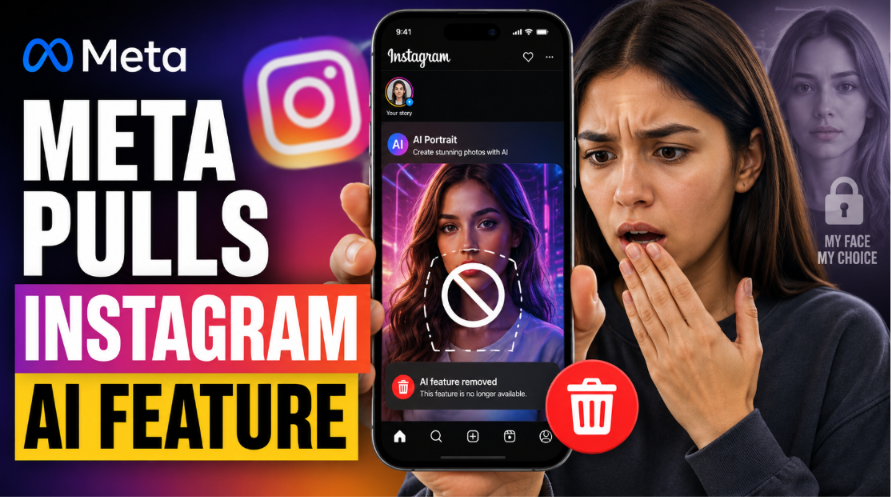
Meta has removed the Muse Image feature that let users insert public Instagram accounts into AI-generated images. Muse Image remains available, but the reversal highlights growing concerns about consent and the use of online photos.
News Summary:
Meta launched Muse Image on July 7.
One feature let users reference public Instagram accounts with an @mention.
Meta removed that option on July 10 after receiving criticism.
Muse Image and its other editing tools remain available.
Meta has removed a new artificial intelligence feature that allowed people to use public Instagram accounts as references when generating images.
The reversal came only days after the company introduced Muse Image, its first image-generation model from Meta Superintelligence Labs.
What did Meta remove?
Muse Image was launched as a tool for creating and editing pictures inside Meta AI. It can follow written prompts, combine photos, remove objects, and place readable text inside images.
At launch, Meta also said users could @mention a public Instagram account. The system could then use public photos from that profile as visual references for a new AI-generated image.
On July 10, Meta updated its announcement and said the public-account reference option was no longer available.
The company said it had intended to provide a useful creative tool and to give account holders control over whether they could reference their content. But Meta acknowledged that the feature had “missed the mark” after receiving feedback.
Why did the feature cause concern?
The main issue was consent.
According to TechCrunch, users were not designed to receive an alert when someone referenced their public photos through the feature. Critics warned that people might not know when someone used their pictures in an AI creation.
Talent agencies and entertainment groups also objected. The Los Angeles Times reported that Creative Artists Agency, United Talent Agency, and performers’ union SAG-AFTRA called for clear opt-in permission before a person’s image or likeness could be used.
An opt-in system keeps a feature disabled until a person chooses to activate it. Meta’s original system instead gave eligible public-account users an option to turn the feature off.
That difference matters because a public photograph is not automatically permission to place someone in a new or misleading setting.
Muse Image has not been withdrawn.
Meta has removed only the ability to reference public Instagram accounts through an @mention. The muse image itself remains available.
The model continues to power image creation in Meta AI, Instagram Story effects, and image generation in some WhatsApp chats. Meta also plans to expand it to Facebook, Messenger, and advertising tools.
So this decision is not a retreat from AI-generated media. It is a narrower reversal involving how public social-media content can be reused.
What marketers and creators should learn
Brands should not treat a public post as automatic approval for commercial AI use.
Before using a person’s face, name, or content in an AI-generated image, marketers should obtain clear permission and keep a record of that approval. They should also verify whether the final image could suggest an endorsement that the person never gave.
Creators should continue watching platform settings and policy updates. A removed feature can return in a different form, and controls may vary by country or account type.
Meta has not said whether it will redesign the account-reference feature or introduce a stricter opt-in version.
The key question is whether future AI tools will ask for consent before using identifiable people—not after complaints begin.
For agencies and creators, the safest rule is simple: public does not mean permission.